LazyInfer
The adaptation layer for physical AI.
Next to your stack, or part of it.
Start with LazyInfer next to the models and controllers you have: it reads the same telemetry and corrects their actions on the way out. When you are ready, let it take over a layer, such as perception, planning or control, and expand across the stack from there.
One core, three layers.
Layer / 01
Perception
One belief about the robot, the cameras and every object, in one frame.
- Odometry and SLAM for mono, stereo and RGB-D cameras
- Fixed-lag smoothing with two-stage loop closure
- Objects detected, tracked and fused into the same map
- Every pose keeps the evidence behind it
Layer / 02
Learning
Tracks the physical parameters that drift after deployment.
- Friction and actuator gain, from live telemetry
- User and environment parameters on wearables, without a GPU
- Updates on the device, with no retraining loop
- Feeds corrections to the policy you already run
Layer / 03
Planning and control
Model predictive control, solved as inference.
- Plans through uncertainty instead of around it
- Corrects the actions of an RL policy, a VLA or a classic controller
- Two arms at 100 Hz on one CPU thread
- The control tick allocates no memory once warm
An inference engine written for robots.
General probabilistic programming is too slow for a control loop. We wrote the solver, the factors and the geometry for real time. On incremental smoothing, our solver runs up to 3.5× faster than GTSAM’s iSAM2 in our benchmarks.
- Inference
- Incremental smoothing on factor graphs, on Lie groups
- Models
- Continuous and discrete variables, robust noise models
- Memory
- No allocation at steady state
- Timing
- Real time on CPU. No GPU required
- Interfaces
- Python, Julia, ROS and ROS 2
In early access
What a robotics team gets today.
- SDK
- Python, Julia, ROS and ROS 2 packages that connect LazyInfer to your sensors, models and controllers.
- Runtime
- Runs on the robot’s own CPU, next to your stack. No GPU and no cloud round trip in the loop.
- Interface
- Set up the hardware, calibrate the cameras, record demonstrations and run the cell.
- Engineers
- We integrate with you on your hardware, from the first log to the first live run.
The LazyInfer interface.
Where your team works with LazyInfer. It takes a robot cell from unboxed hardware to a live run: hardware, calibration, demonstrations, then live operation with a stop button always in reach.
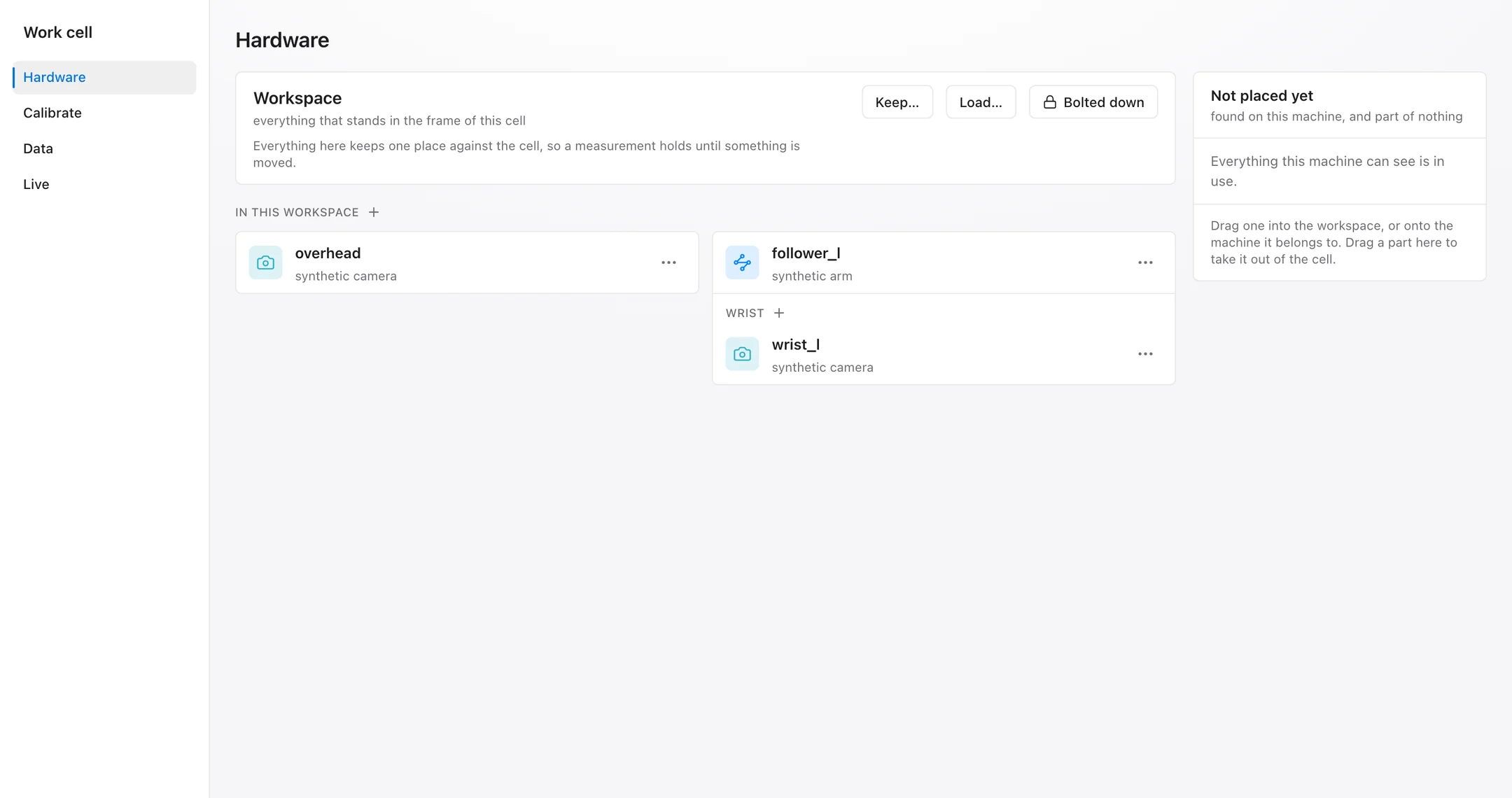
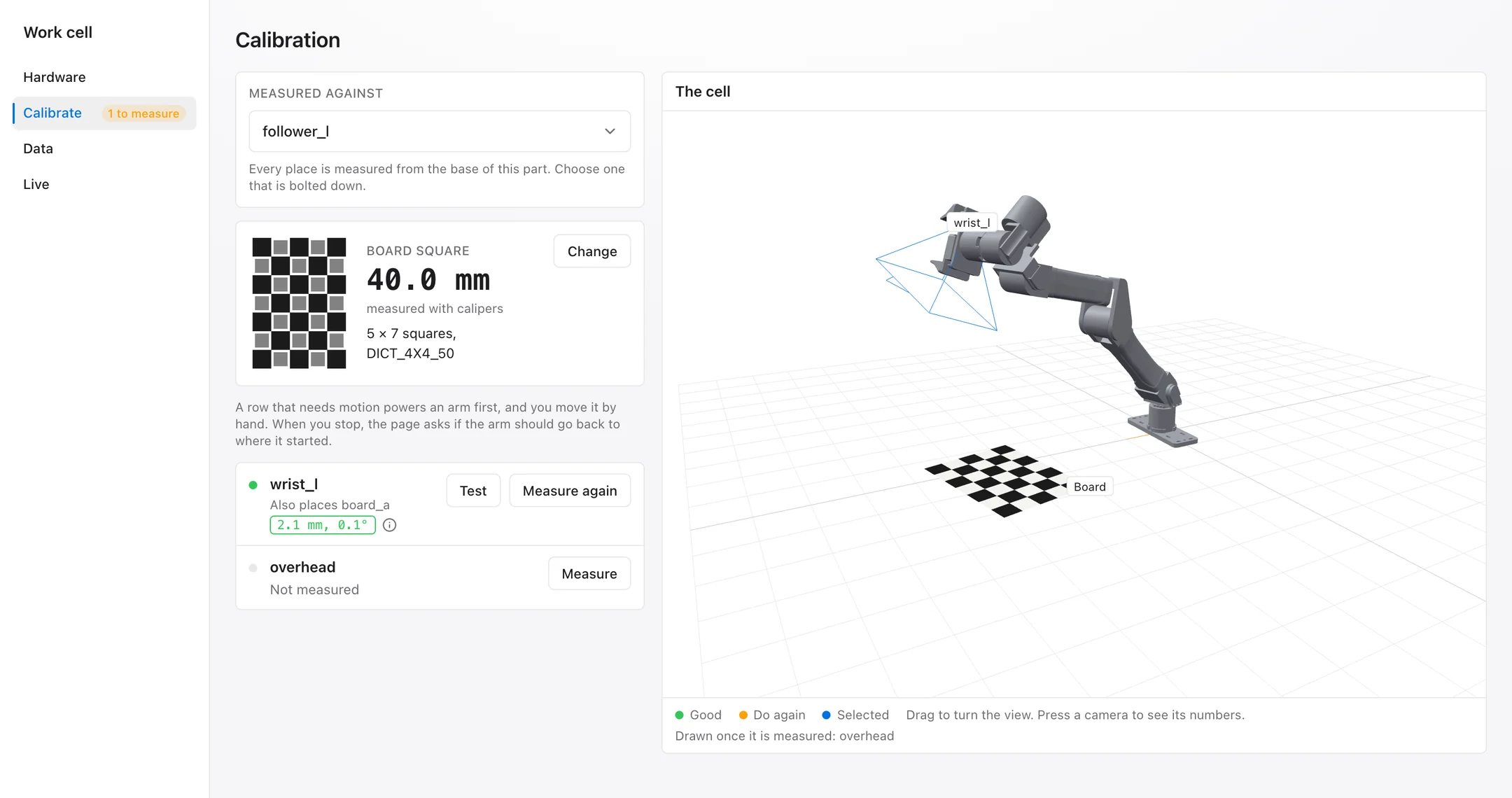
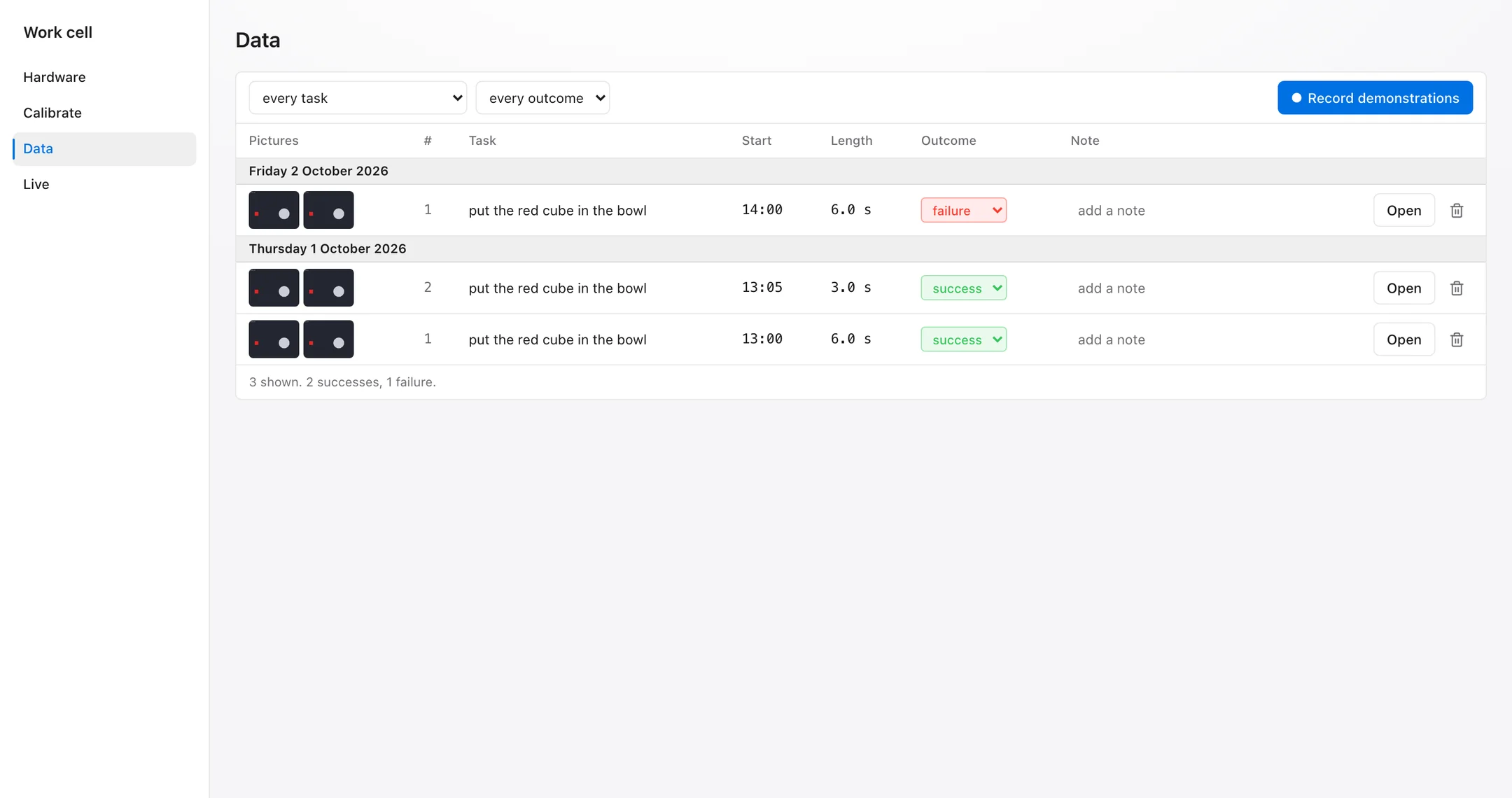
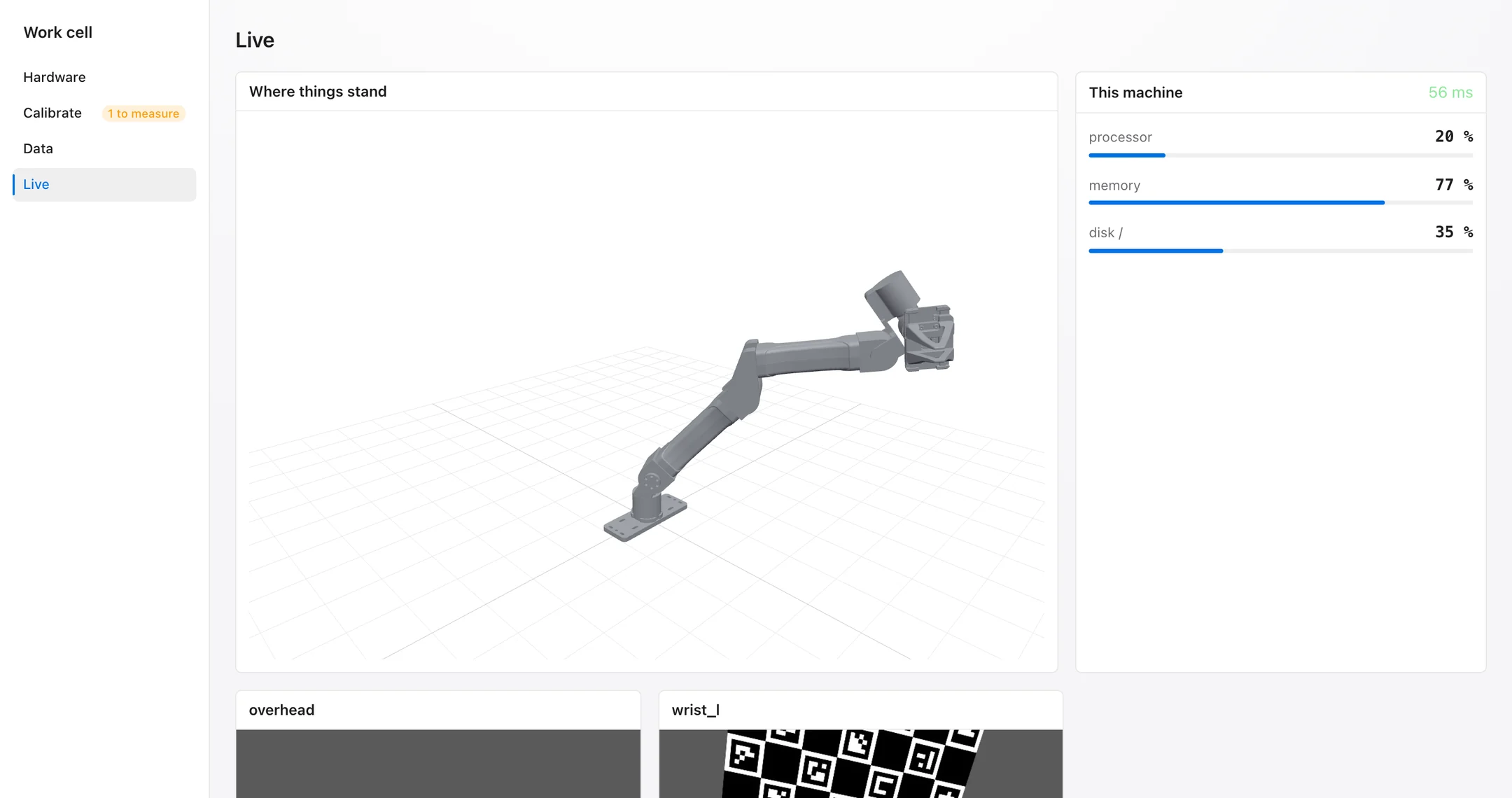
Drag the arms and cameras you have into the cell. Nothing to edit by hand.
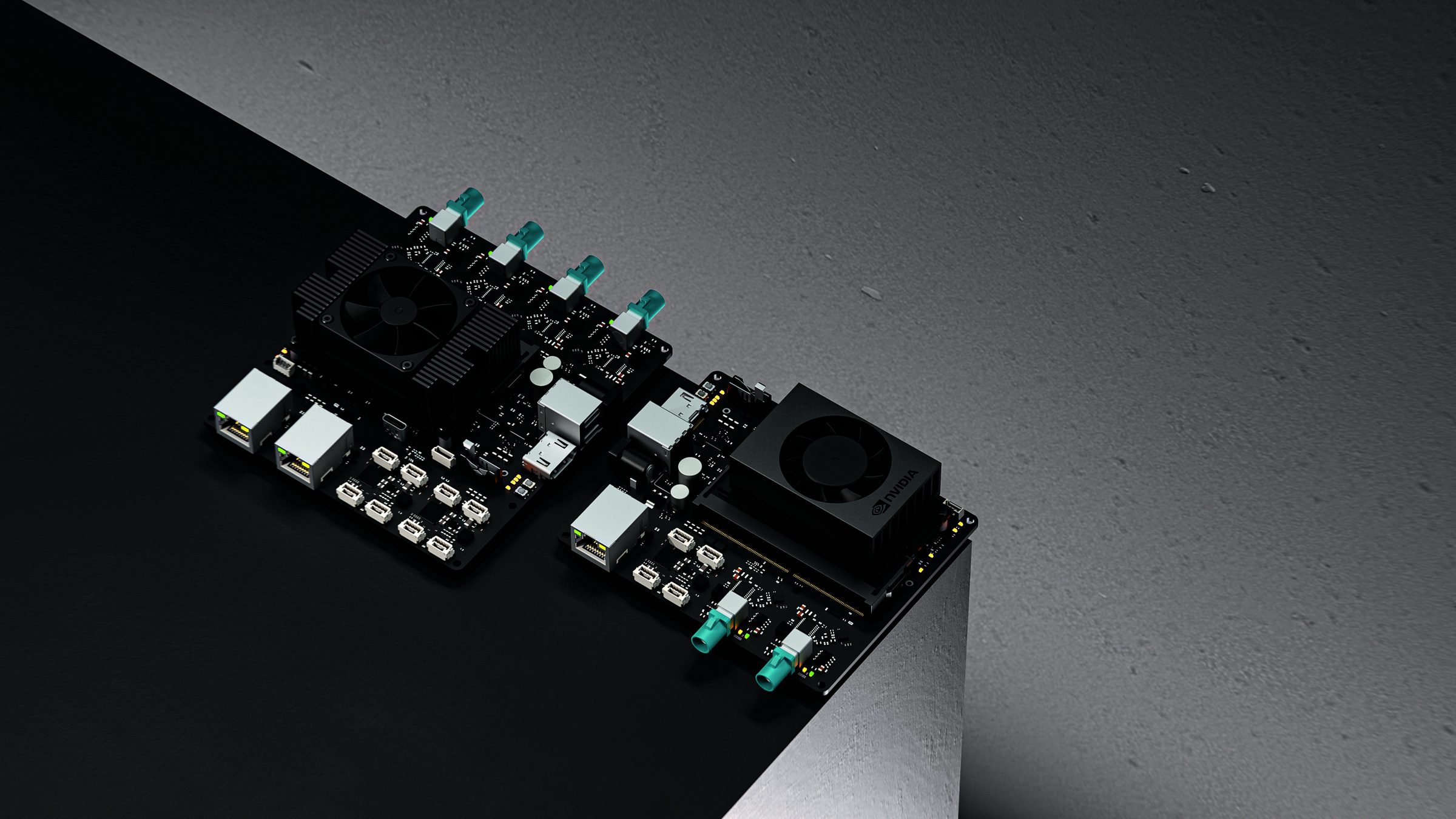
Coming soon: compute board
Any sensor.
In sync.
Adapting.
One compute board for many kinds of sensors, with their data streams kept in sync. LazyInfer runs on it and adapts while the robot works.
Developed with

- SensorsModular
- Connect different cameras and sensors to one board, and change the mix as your robot changes.
- Data streamsSynchronized
- Data from every connected sensor arrives in sync, ready to fuse.
- EstimatesAdaptive
- Factor graphs, incremental smoothing and IMU preintegration fuse the streams on the device, and update as conditions change.
Built for
- Mobile robots
- Robotic arms
- Drones
- Humanoids
Early access is open for robotics teams.

Albert Podusenko
Chief Executive Officer
We work with a small number of teams on real hardware. Tell us what you run and where it struggles.